Mapping Out Next Quarter? Read This First.
The last few months of the year always feel like a weird mix of “I’ve got this!” paired with the quiet panic of everything that still feels unfinished.
It’s a blur of catching up and closing out, all while trying to make the upcoming year better than the last.
If you’re tired, a little guilty for not doing more, and already feeling the pressure of what's next, you’re not alone.
As I sip my fourth cup of coffee for the day…
This isn’t another reflection on New Year’s resolutions or a guide to perfectly color-coded goals. It’s meant to be a reminder to pause and refocus on building not only the business, but the founder behind it.
Year‑end planning shouldn’t feel like a race. It should feel like clarity. When the clarity is right, the momentum tends to follow.
You’re Not Behind. You’re Just in the Middle.
By December, everything starts to pile up. Plans, goals, deadlines, and a growing sense that it *all* needs to be wrapped up neatly before January 1st.
In the rush to finish strong, it’s easy to lose sight of who is actually running the race. The goal isn’t speed for the sake of speed. The goal is to break free from what’s typical or expected and build something that actually lasts.
What I’ve learned over time is that the people who truly stand out aren’t the ones with the flashiest plans or the ones who sprint out of the gate in the new year. They’re the ones who take the time to get clear on who they’re becoming and then move deliberately in that direction.
That’s what this moment is really for. Not more hustle or more noise, but reflection, alignment, and intentional forward motion.
So if December is winding down and you’re already thinking about what’s next, grab something warm and go through this with me. ☕
Check Your Rearview Like It’s Pass-or-Fail
For years, I heard the same advice when it came to goal setting and alignment:
“Don’t look back, you’re not going that way.”
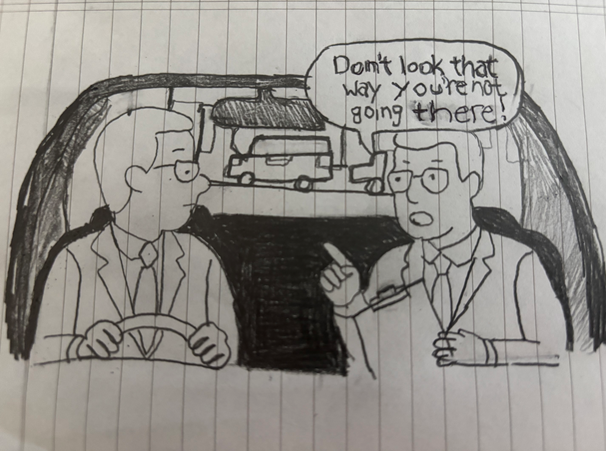
In an industry obsessed with the next target, the next allocation, or the next raise, that advice sounds reasonable. Why dwell on missed deals or opportunities that didn’t land?
But progress rarely introduces itself in real time. It often lives in the margins of your story, waiting for you to flip back a few pages and notice how far the plot has actually moved.
That’s why year-end clarity can’t just be about forecasting alone. If you’re trying to build anything in finance, looking backward is how you see the real story behind the numbers.
I don’t reflect on miles. I reflect on milestones.
The first investor who took a chance
The pitch that finally resonated
The moment a “crazy” idea proved it had legs
Those aren’t sentimental memories. They’re evidence that your edge, story, and process work.
I also revisit what I consider the real receipts—not dashboards or KPIs, but emails, handwritten notes, and messages from people whose businesses were elevated because of the partnerships we built.
Most of us overlook what went well and get stuck on the struggle. When you take a moment to look back, you often realize just how much progress has already been made.
And that changes how you decide to move forward.
No? Maybe? Actually… Heck Yes.
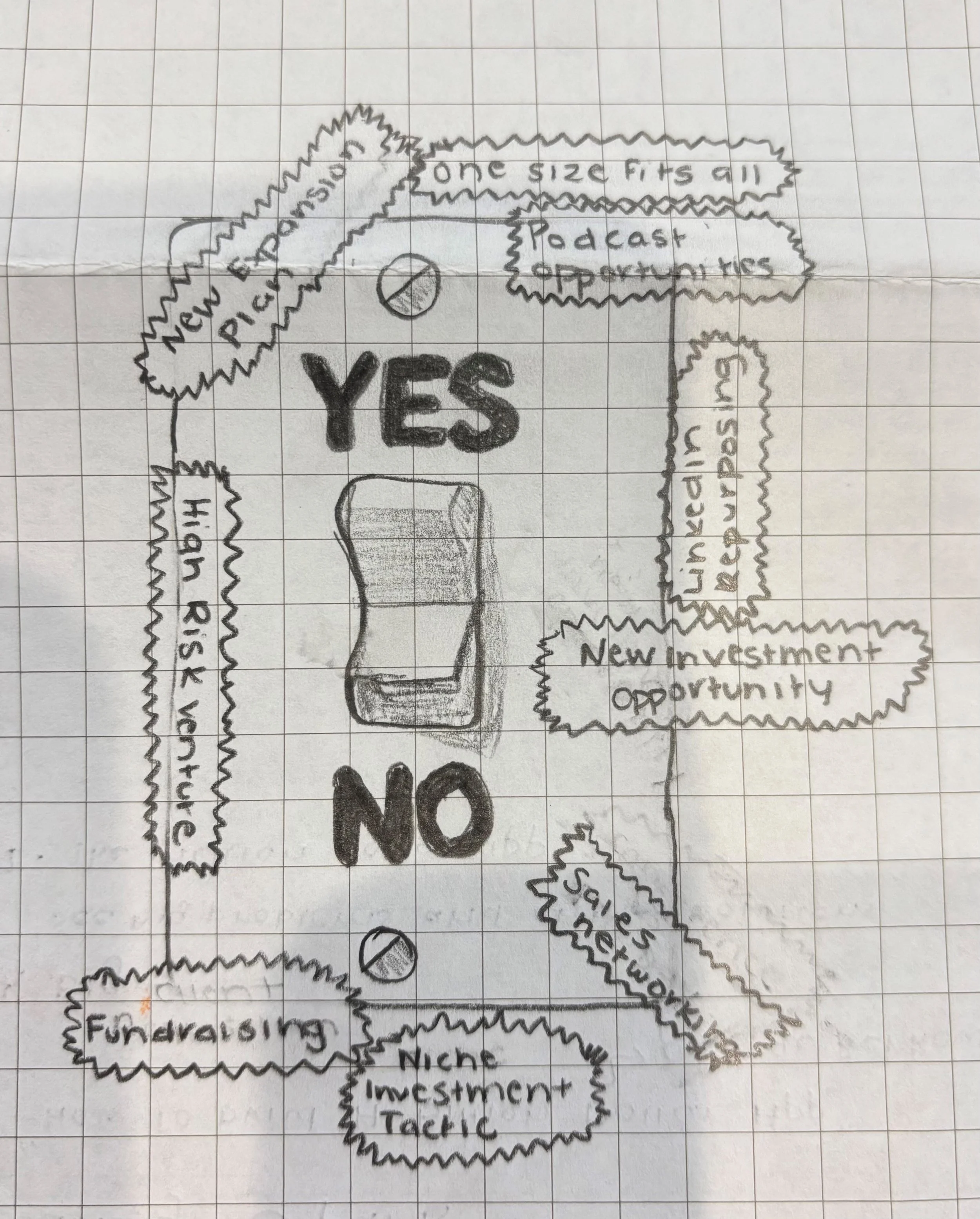
When you trust your progress, your perspective sharpens. You become clearer about what deserves a yes and what truly needs a no.
We’re told to say no more often.
“Guard your time!” “Cut out distractions!” “Stay focused!”
All good advice. But if we get too comfortable saying no, we risk closing the door on opportunities that could have really mattered.
The turning points in my career didn’t come from cautious restraint. They came from saying yes (often before I felt completely ready).
Not every yes is the right one, of course. Learning when to say no is part of growth. But so is recognizing the yes that pulls you forward, challenges you, and aligns with the person you’re becoming.
At this stage, the real work isn’t about defaulting to yes or no. It’s about understanding how you arrive at either answer—and whether that decision is driven by alignment or by pressure.
When EOS Entered the Chat
There was a point when everything felt louder than it needed to be. Goals were piling up, every issue felt urgent, and despite working hard, I couldn’t shake the sense that effort alone wasn’t the problem.
That’s when I implemented the Entrepreneurial Operating System (EOS).
For anyone new to it, EOS is a simple framework that helps you run your business with clarity, accountability, and focus. It takes what feels complicated to both the team and individuals and organizes the mess into something you can actually navigate.
EOS helped me see something important: the issue wasn’t effort. It was alignment.
It forced me to ask better questions that seem deceptively simple: Is this goal actually mine? Is it neglected, or simply misaligned? Am I carrying it because it matters, or because I feel pressure to?
Once I started viewing my business through that lens, things shifted.
I could finally separate what truly moved the business forward from what was just adding noise. That clarity changed how I lead, prioritize, and think about growth.
Relighting the Founder Fire
With that clarity in place, I began to notice something else. Some of the routines and responsibilities I’d taken on no longer lit me up. I was checking boxes, but not all of them felt meaningful.
So, I made a few intentional shifts to relight what I think of as my founder fire.
Step 1: Take fewer company rocks.
In EOS, rocks are 90‑day priorities, and founders often assume they should carry the heaviest ones. Nope. The season I didn’t, everything changed. I finally had space to think like a visionary again.
Step 2: Schedule clarity breaks.
I also began scheduling clarity breaks—walks without my phone, screen-free time, moments to let my mind wander. So many of my most meaningful breakthroughs happened away from my desk,
Step 3: Follow your gut.
I made a very conscious effort to trust my gut again. Metrics without meaning are empty. Alignment with your instincts, purpose, and values is what creates lasting momentum.
Carrying the Fire Forward
Clarity isn’t something you stumble into at year-end. It’s something you build, layer by layer, through reflection, alignment, and an honest look at what actually fuels you.
As founders, we often chase the next milestone without realizing that the foundation for real progress is already in what we’ve learned, the people we've trusted, and the instincts we’ve refined along the way.
So, as another year winds down and the noise of “what’s next” starts getting louder…
Pause long enough to acknowledge and honor your own growth.
Then move forward with the kind of focus that comes from knowing yourself better.
The best plans don’t start with a strategy deck. They start with a grounded, re‑lit founder.
That’s the fire worth carrying into the new year.
Curious how EOS can save your business?